

Understanding 4-Aminoantipyrine (4-Aminophenazone): Applications, Chemistry, and Laboratory Importance
In the complex world of analytical chemistry and biochemical research, few reagents are as versatile and essential as 4-Aminoantipyrine, also commonly known as 4-Aminophenazone. This organic compound has established itself as a cornerstone in diagnostic medicine, environmental monitoring, and synthetic chemistry.
A: No. While they are related, 4-Aminoantipyrine has an amino group at the 4th position of the pyrazolone ring, which makes it highly reactive for the oxidative coupling used in colorimetric assays.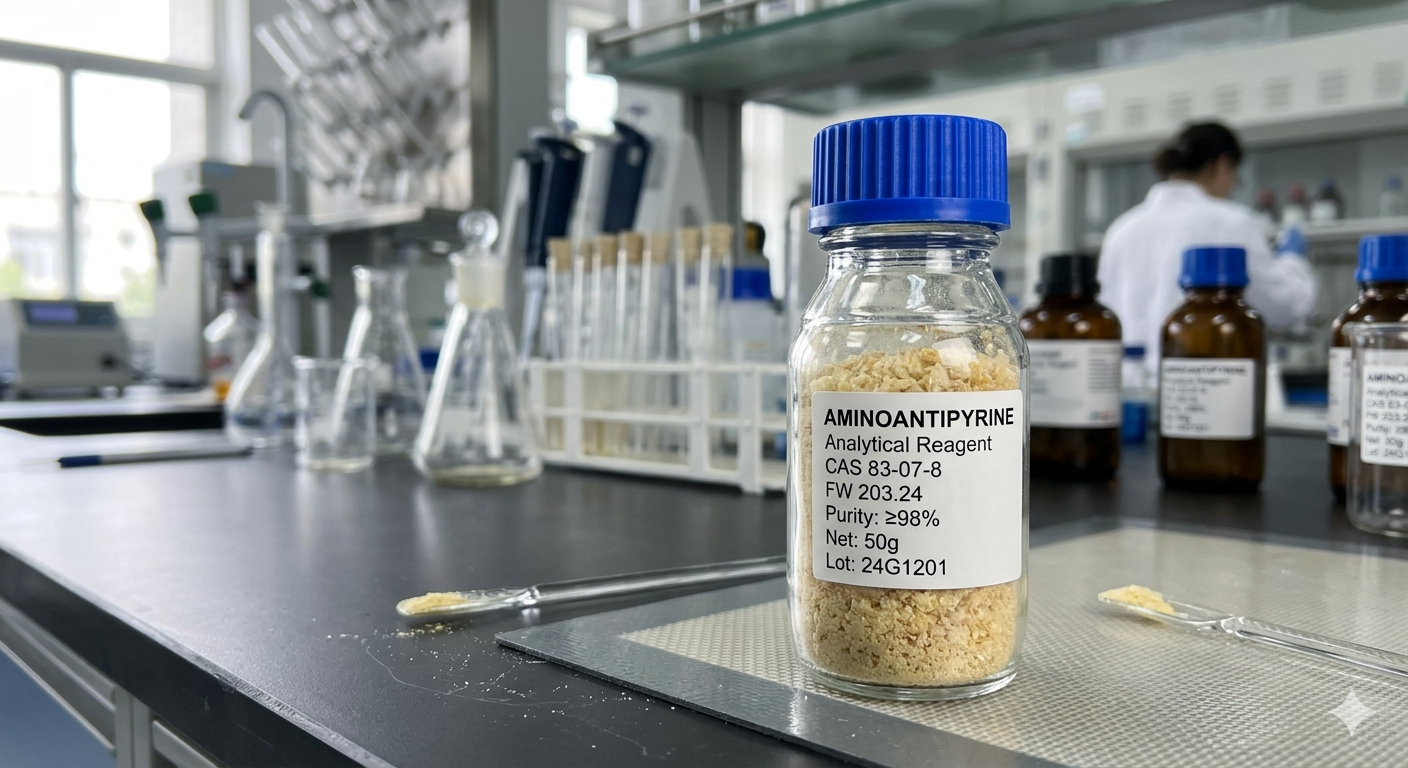
B: No. This is a laboratory-grade chemical intended for professional use in controlled environments.
C: Slight discoloration can occur due to oxidation. While high-purity powder is usually light yellow, extreme darkening may indicate degradation, which could affect the accuracy of sensitive colorimetric tests.
Whether you are a laboratory professional, a researcher, or an industrial procurement specialist looking for high-quality chemical precursors from trusted sources like Brand Chemical Supplies, understanding the depth and breadth of this compound is vital.
What is 4-Aminoantipyrine?
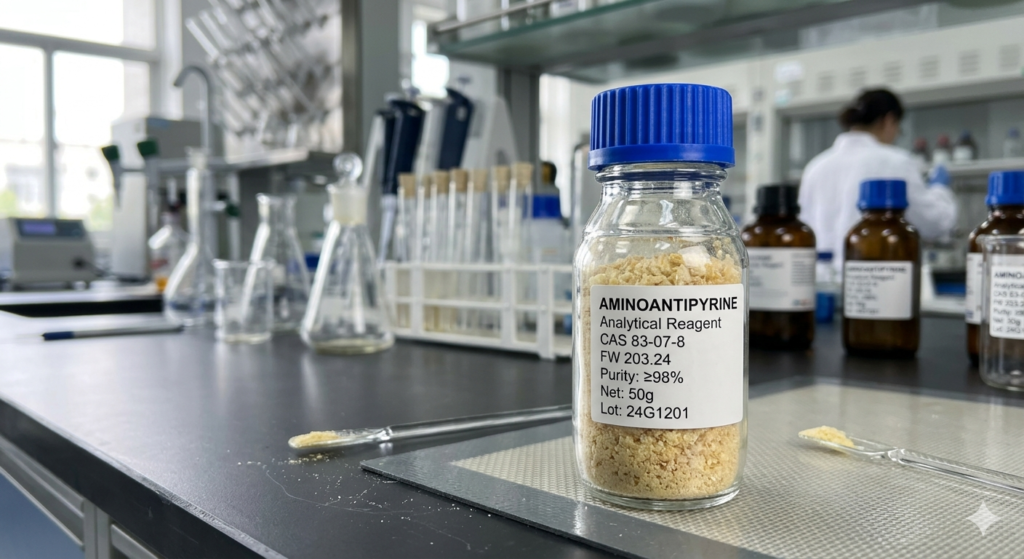
4-Aminoantipyrine (CAS Number: 83-07-8) is an amine derivative of phenazone (antipyrine). Structurally, it belongs to the pyrazolone family. In its pure form, it typically appears as a light yellow to tan crystalline powder.
Historically, the antipyrine family was used for its analgesic and antipyretic properties. However, modern science has transitioned 4-Aminoantipyrine away from direct therapeutic consumption and toward its role as a powerful chromogenic reagent—a substance used to produce color in chemical reactions to detect the presence of other materials.
Physical and Chemical Properties
- Molecular Formula: $C_{11}H_{13}N_3O$
- Molecular Weight: 203.24 g/mol
- Melting Point: 107–109 °C
- Solubility: Soluble in water, ethanol, and benzene.
The Role of 4-Aminoantipyrine in Clinical Diagnostics
The most widespread use of 4-Aminoantipyrine is in the medical field, specifically within clinical biochemistry. It is the “magic ingredient” in many enzymatic assays that determine a patient’s health profile.
1. Glucose Testing (The Trinder Reaction)
The Trinder reaction is perhaps the most famous application of this compound. In blood sugar testing, the enzyme glucose oxidase reacts with blood glucose to produce hydrogen peroxide. 4-Aminoantipyrine, in the presence of a phenol and the enzyme peroxidase, reacts with that hydrogen peroxide to create a red-colored quinoneimine dye.
The intensity of the red color is directly proportional to the glucose concentration in the blood, allowing for precise spectrophotometric measurement.
2. Cholesterol and Triglyceride Assays
Similar to glucose testing, 4-aminophenazone is used to quantify lipids. By coupling the enzymatic breakdown of cholesterol with the production of a colored dye, clinicians can quickly assess a patient’s risk for cardiovascular disease.
3. Uric Acid Determination
Elevated levels of uric acid are a primary indicator of gout and renal failure. 4-Aminoantipyrine allows for the rapid detection of uric acid in urine and serum samples through oxidative coupling reactions.
Environmental and Industrial Applications
Beyond the hospital lab, 4-Aminoantipyrine plays a critical role in protecting our environment, specifically in water quality testing.
Phenol Detection in Wastewater
Phenols are common industrial pollutants that can be toxic to aquatic life even in low concentrations. 4-Aminoantipyrine is the standard reagent used in the “4-AAP Method” (or Emerson Reaction) for detecting phenolic compounds in water.
In an alkaline solution (usually around pH 10) and in the presence of an oxidizing agent like potassium ferricyanide, 4-Aminoantipyrine reacts with phenols to form a bright red or orange antipyrine dye. This color change allows environmental scientists to detect contamination levels in parts per billion (ppb).
The Importance of High-Purity Reagents
When performing sensitive assays—whether you’re testing a patient’s cholesterol or a city’s water supply—the purity of your reagents is non-negotiable. Contaminants in 4-Aminoantipyrine can lead to:
- Inaccurate Baselines: Impurities can cause “background noise,” leading to false-positive results.
- Reduced Sensitivity: Lower purity levels may fail to detect trace amounts of phenols or glucose.
- Reagent Instability: High-quality 4-aminophenazone has a longer shelf life and remains stable during complex reactions.
For institutions requiring consistent, ACS-grade or Reagent-grade chemicals, sourcing from specialized providers like Brand Chemical Supplies ensures that the experimental data remains valid and reproducible.
Safety and Handling
As with all pyrazolone derivatives, 4-Aminoantipyrine should be handled with care. While it is not classified as a highly toxic substance, it can be an irritant.
- Inhalation: Avoid breathing in dust; use a fume hood or mask.
- Skin Contact: Can cause mild irritation. Always wear gloves and laboratory coats.
- Storage: Store in a cool, dry place, protected from direct light, as it is sensitive to oxidation over long periods.
Conclusion: A Small Molecule with a Big Impact
4-Aminoantipyrine (4-Aminophenazone) may not be a household name, but it is an unsung hero of modern science. From managing diabetes to keeping our rivers clean, its ability to turn invisible chemical reactions into measurable colors makes it indispensable.
If your laboratory or industrial facility requires high-grade 4-Aminoantipyrine or other essential chemical precursors, it is vital to partner with a supplier that understands the nuances of chemical purity and logistics.
Explore a wide range of laboratory-grade chemicals at Brand Chemical Supplies and ensure your research is backed by quality.
FAQ: Frequently Asked Questions
Q: Is 4-Aminoantipyrine the same as Antipyrine?
A: No. While they are related, 4-Aminoantipyrine has an amino group at the 4th position of the pyrazolone ring, which makes it highly reactive for the oxidative coupling used in colorimetric assays.
Q: Can 4-Aminoantipyrine be used for DIY medical testing?
A: No. This is a laboratory-grade chemical intended for professional use in controlled environments.
Q: Why does my 4-Aminoantipyrine powder look slightly brown?
A: Slight discoloration can occur due to oxidation. While high-purity powder is usually light yellow, extreme darkening may indicate degradation, which could affect the accuracy of sensitive colorimetric tests.
